

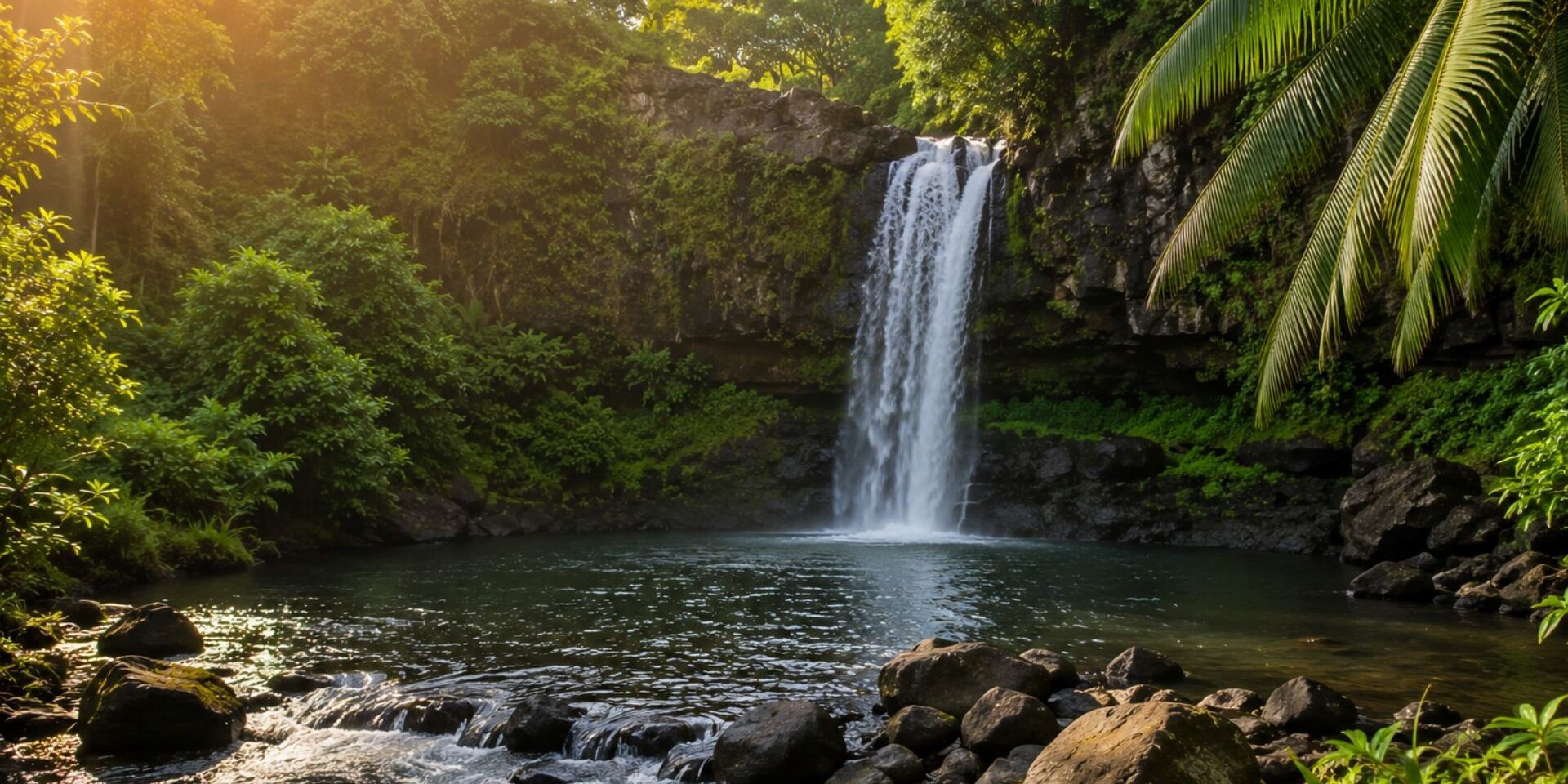
There is a moment between the 30th waterfall and the smell of fresh banana bread drifting through an open van window, when the Road to Hana Maui stops feeling like a sightseeing trip. It starts feeling like something else entirely. Something older. Something alive!
Most visitors come to Hana chasing photographs. They want the black sand beach, the dramatic waterfalls, the winding highway. And they get all of that. But underneath every mossy rock, behind every curtain of falling water, and inside every ancient stone wall along the route, there is a story that most tourists never hear. This is that story.
A tour to Hana with the right guide does not just show you Maui’s beauty. It hands you the key to understanding why this place feels different from anywhere else on earth. With Stardust Hawaii, you get expert guides who share Hawaiian history, legends, and cultural knowledge. They carry this information like people carry their phones; always close by and ready to share!
What is Mana & Why the Road to Hana Maui Is Full of It?
Before you can understand why a tour to Hana feels the way it does, you need to understand one Hawaiian word: mana.
Mana is spiritual power. It is the divine energy that Hawaiians believe flows through people, animals, land, and water. Some places carry more of it than others. Sacred sites, ancient temples, and places where the natural world is still raw and untouched tend to hold the most.
The Road to Hana Maui is one of those places.
East Maui receives more rainfall than almost any other place in Hawaii. The result is a landscape so green, so alive, and so untamed that it practically pulses. Ancient Hawaiians recognized this energy long before any highway existed here.
They built temples, farmed taro in terraced valleys, and passed down oral stories about the gods and chiefs who walked these same ridgelines.
The Road to Hana was listed on the National Register of Historic Places on June 15, 2001. In 2000, President Bill Clinton named it a National Millennium Legacy Trail. When you sit in a comfortable van, you are traveling through one of the most spiritually significant areas in the entire Pacific. Most people do not know that. A great guide makes sure you do.
Ancient ‘Heiau’ Along Your Tour to Hana: Sacred Sites Most Tourists Drive Past
The word heiau means temple in Hawaiian. These were not small shrines. Some of them were enormous stone platforms, built without mortar, machinery, or any tools beyond human hands and volcanic rock.
Several of them sit along the route of a tour to Hana. Most tourists drive right past them.
Piʻilanihale Heiau: The Largest Temple in Polynesia
Located within Kahanu Garden, just before you reach Hana town, Piʻilanihale Heiau is not just the largest heiau in Hawaii. It is the largest ancient Hawaiian temple in all of Polynesia. The platform was built over many centuries and finished around the 14th century. It is nearly two football fields long and rises more than 50 feet high in some places.
Standing in front of it, the scale is genuinely hard to process. This was a place of worship, ceremony, and enormous political power. The chiefs who commanded its construction shaped the entire history of Maui.
Hana Cultural Center: Where History Lives On!
A short distance away, the Hana Cultural Center holds collections of tools, artifacts, and records that tell the daily story of life in old Hana; not the dramatic royal history, but the quieter human one. Fishing weights. Farming tools. Photographs of families who built this community before any tourists ever arrived.
What do These Sites Mean for Your Tour to Hana Today?
Visiting a heiau without context is like reading a book in a language you do not speak. You can see that it matters. You just cannot understand why. A knowledgeable guide changes everything. They do not just point at a stone wall; they tell you who built it, what was offered there, and what it meant to the people who gathered on that ground.
That is the difference between a scenic drive and a real tour to Hana.
Hana Waterfalls: Sacred Waters, Not Just Scenic Stops
In Hawaiian culture, fresh water is called wai. The word for wealth, waiwai, literally means “water” said twice. That tells you everything about how Hawaiians valued it.
The Hana waterfalls that pour down Maui’s eastern cliffs were never just pretty backdrops. They were sources of life, spiritually significant landmarks, and in some cases, sacred sites in their own right.
Pua’a Ka’a Falls: Where Visitors Swim in Sacred Waters
One of the most beloved stops on any tour to Hana, Pua’a Ka’a Falls tumbles into a clear, cool pool surrounded by tropical vegetation. Swimming here is one of those experiences that people describe years later with a certain reverence. The water is cold and clean, and it feels completely removed from the modern world.
That feeling is not accidental. This place has been considered sacred for centuries.
Upper Waikani Falls: The Triple Cascade
Further along the highway, Upper Waikani Falls drops in three separate cascades through dense rainforest.
Most self-drive visitors miss it entirely. It does not have a big sign. It does not have a parking lot. A guide who knows the road knows exactly when to slow down.
What the Waters of Hana are Trying to Tell You?
The Hana waterfalls are not just waterfalls. They are reminders that this island is still doing what it has always done: feeding the land, sustaining life, and moving with a rhythm that has nothing to do with human schedules. Standing underneath one, even briefly, has a way of resetting something inside people that they did not realize needed resetting.
Guided Tour to Hana vs. Driving Alone: A Quick Comparison
| Experience | Self-Drive | Guided Tour to Hana |
|---|---|---|
| Heiau explanation and history | Not available | Expert narration included |
| Sacred waterfall context | Just a swim stop | Cultural significance shared |
| Mana sites identified | Easy to miss entirely | Pointed out and explained |
| Respectful visitation guidance | Not provided | Built into every stop |
| Local legends and oral history | Not available | Shared throughout the day |
Ancient Legends Told only on the Road to Hana Maui
Every bend in the road has a story. Most of them are never written down anywhere. They exist in the mouths of people who grew up here, passed from grandparent to grandchild over generations of sitting together after dark.
The Legend of Waianapanapa: Love, Betrayal & the Black Sand Beach
The name Waianapanapa means “glistening fresh water” in Hawaiian. But the legend behind this place is anything but peaceful.
According to oral tradition, a Hawaiian princess named Popoalaea hid inside one of the sea caves at Waianapanapa to escape her jealous husband, Chief Kakae. He found her anyway. In her memory, the waters in the cave turn red each spring with tiny red shrimp. Older Hawaiians say that the red color is her blood, which has stained the water for centuries.
Standing on that black sand beach, knowing that story changes the experience completely.
Why Storytelling is the Heart of Every Tour to Hana?
Hawaiian culture was never a written one. Its history, its values, and its spirituality lived inside stories told out loud. When a guide shares these legends on a tour to Hana, they are not performing for tourists. They are continuing a tradition that is thousands of years old.
That is worth more than any photograph.
How Stardust Hawaii Honors the Spiritual Side of the Tour to Hana?
Not every tour company treats the Road to Hana Maui, as the sacred corridor it actually is. Stardust Hawaii does!
The guides at Stardust Hawaii are not just drivers who know the road. They are storytellers, historians, and cultural ambassadors who genuinely care about the land they are sharing. Groups are limited to 14 people, and we travel in comfortable Mercedes Sprinter vans. This setup creates a close atmosphere where real conversations can happen. For instance, a guide might stop talking to let everyone appreciate a waterfall that just appeared, allowing for a moment of silence.
Guests consistently describe their tour to Hana with Stardust as transformative. Not just beautiful. Transformative! That distinction matters.
In a Nutshell,
The Road to Hana Maui has been drawing travelers for decades. Most of them come back saying the same thing: that it felt like more than a drive. That something about it stayed with them. That they are not entirely sure how to explain it.
Now you know what that something is.
It is mana. It is the weight of ancient heiau rising from the earth. It is the sound of Hana waterfalls pouring into pools that have been sacred for a thousand years. It is the voice of a guide who knows this road has stories most tourists never hear.
You can drive the Road to Hana alone and come back with beautiful photographs. Or you can take a tour to Hana with Stardust Hawaii and come back with something that photographs cannot hold.
Book your sacred tour to Hana with Stardust Hawaii today and finally see what the road has been waiting to show you!
FAQs
What is mana, and will I feel it on a tour to Hana?
Mana is the Hawaiian concept of spiritual power in people, land, and nature. Many visitors describe an unexplainable sense of peace and connection on the Road to Hana Maui; that feeling has a name, and it has been recognized here for centuries.
Are the heiau on the Road to Hana Maui, open to visitors?
Piʻilanihale Heiau at Kahanu Garden is open to visitors with an entry fee. Respectful behavior is essential; a guided tour to Hana ensures you visit these sites the right way.
Can I swim in the Hana waterfalls during the tour?
Yes, weather permitting. Pua’a Ka’a Falls and Waianapanapa Black Sand Beach are both swimming stops on the Stardust Hawaii tour.
How long is the tour, and will there be time at spiritual sites?
The tour runs 10 to 12 hours. Stardust Hawaii’s guides balance scenic stops, cultural sites, and Hana waterfalls so nothing feels rushed.
Is the cultural content suitable for children?
Absolutely. Kids tend to love the legends, the lava tubes, and the waterfalls. The small group size means guides can pitch the storytelling to every age in the van.