

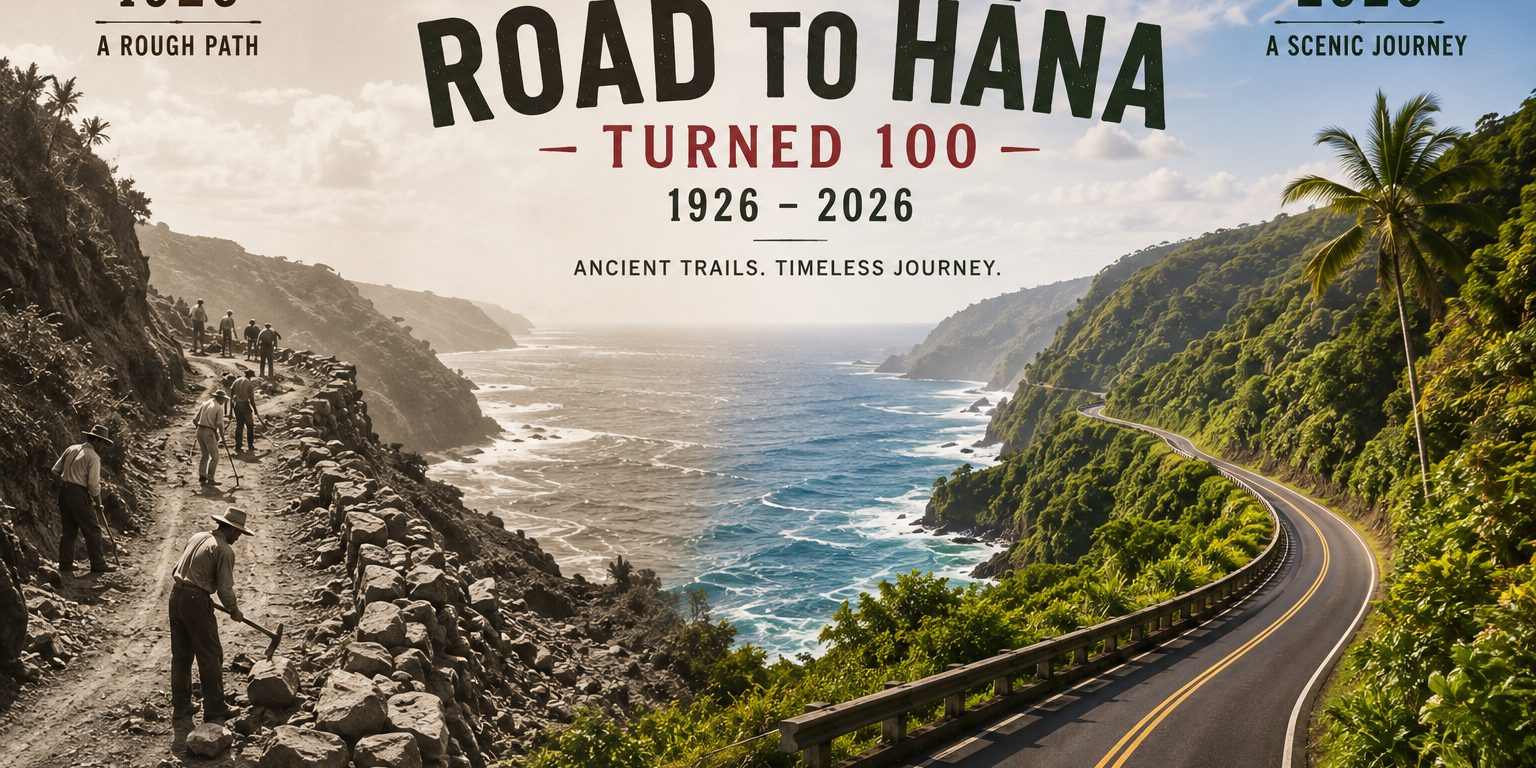
In 1926, a gravel road opened along Maui’s wild east coast. It was rough, narrow, and built for hauling crops, not chasing views. Nobody expected it to become one of the world’s most famous drives.
Now it’s turning 100.
The Road to Hāna packs 64 miles, 59 single-lane bridges, and 620 sharp turns into a single unforgettable day. But it’s more than a scenic route. This Road Trip to Hāna is a living time machine, tracing a path Native Hawaiians first walked 500 years ago.
Who Built This Road First? (Hint: Not Cars)
Long before a single car ever turned a wheel here, this coastline belonged to people on foot.
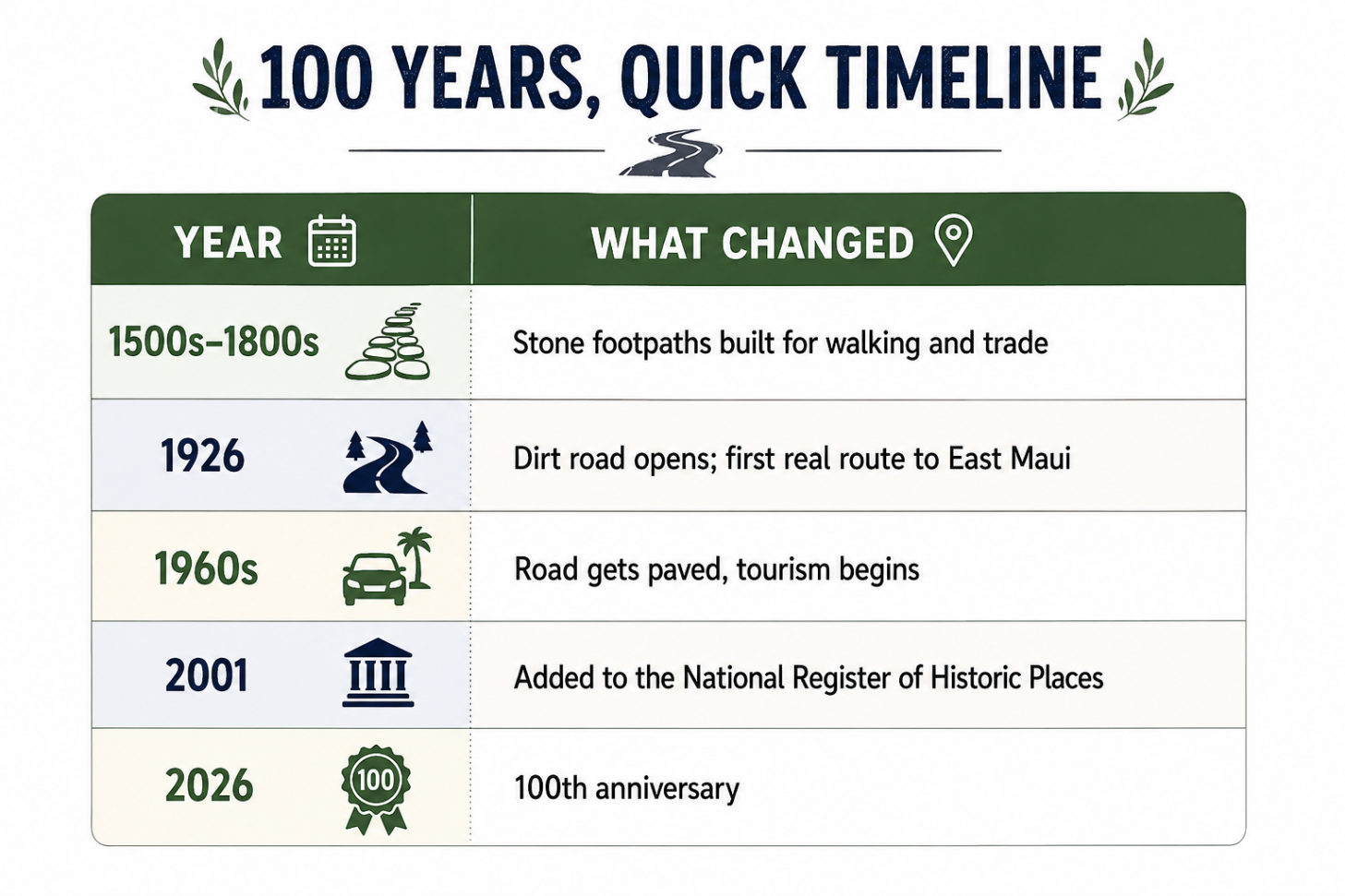
In the 1500s, a Maui chief named King Kiha-a-Piʻilani ordered a stone path built around the entire island; the Kiha-a-Piʻilani Trail. Villages, traders, and royal messengers moved along it for centuries.
Look closely at today’s route, and you’re really tracing his footsteps.
What Happened in 1926?
By the early 1900s, Maui’s sugar and pineapple farms were booming. East Maui needed a real way to move goods and people.
There was just one problem: the cliffs.
Too steep and narrow for steam shovels or heavy machines, the terrain left workers with only picks, shovels, and dynamite. They blasted through solid rock by hand.
They mixed local sand and stone into the bridges, too. Many of them are still standing today.
When the Road finally opened in 1926, it was nothing fancy; just dirt and gravel, rough and bumpy the whole way. But it turned a multi-day journey into a single day’s drive.
That alone changed everything.
What Will You Actually See on the Drive?
Four stops matter most:
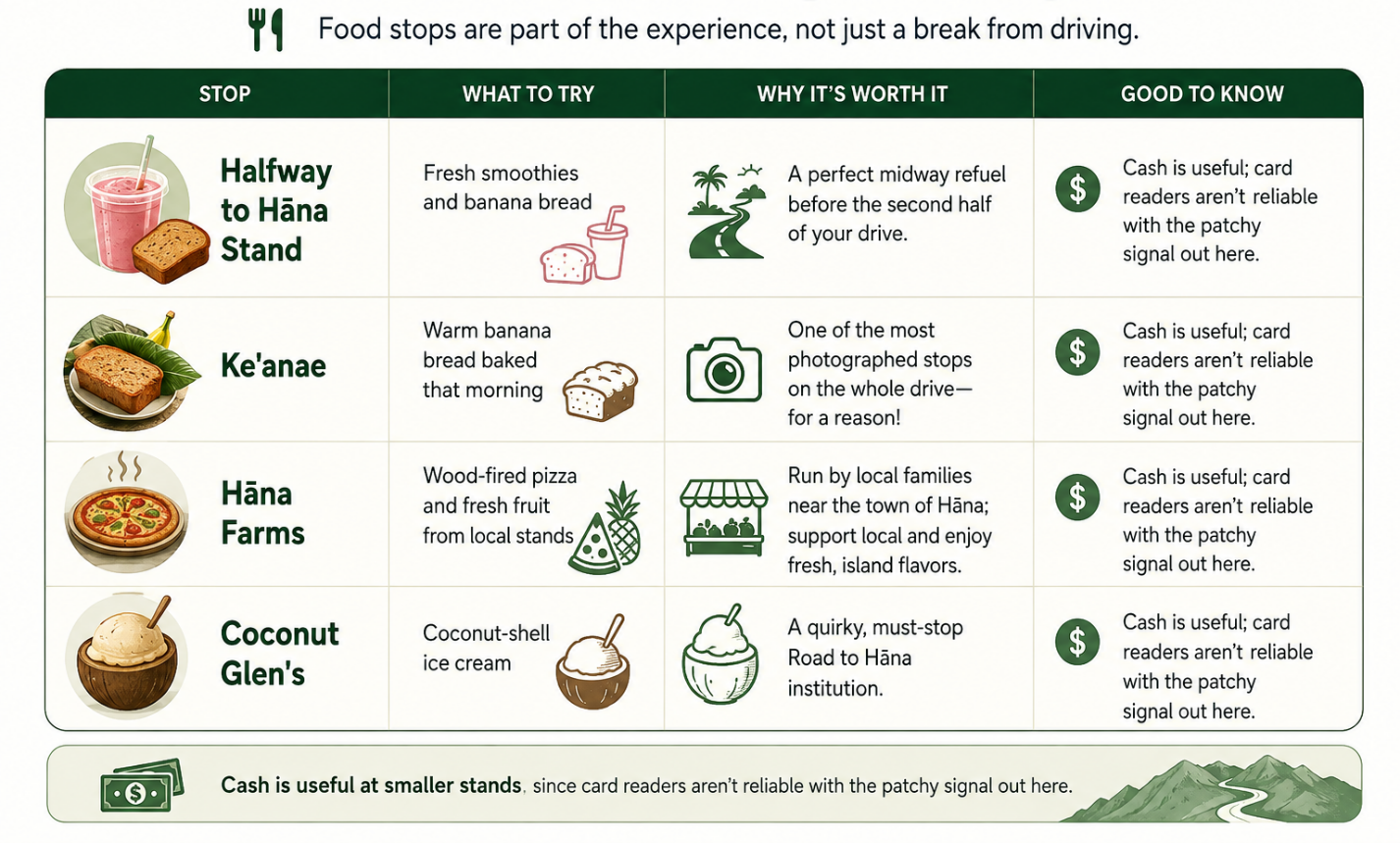
- Ke’anae Peninsula; A lava point sticking into the ocean. There’s a stone church from 1860 and famous fresh banana bread nearby.
- Pua’a Ka’a State Wayside; A small jungle park with twin waterfalls and swimming holes, right off the Road.
- Waiʻanapanapa State Park; Maui’s black sand beach. Also has sea caves and lava rock cliffs. This is the spot most people picture when they think of Hāna.
- Wailua Falls: An 80-foot waterfall right next to the Road. You can see it without even leaving your car.
Best Time to Start Your Drive
The earlier you leave, the better your day will be.
- Leave by 7:00 AM: Parking at waterfalls and lookouts fills up fast after 9 AM, and afternoons mean sharing single-lane bridges with drivers rushing back before dark.
- Better light, fewer crowds: An early start means better photos and a real shot at having spots like Pua’a Ka’a or Wailua Falls to yourself.
- Winter (Nov-Mar): Heavier rain means fuller waterfalls, but also slicker roads and higher stream crossings.
- Summer: Drier conditions make it an easier drive for first-timers.
Renting a Car vs. Booking a Tour
- Self-drive: You’re behind the wheel for all 620 turns; reading every hairpin bend, yielding at every single-lane bridge, and hunting for parking at each stop. It’s doable, but it’s work.
- Vehicle needed: No 4×4 required, just a compact car and a lot of focus; anything wider than a mid-size vehicle struggles to fit some of the older bridges.
- Guided tour: None of that is your problem. You sit back, someone else handles the turns, and you actually get to look at the waterfalls instead of the Road.
- Not all tours are equal: Big buses stuffed with 30+ people mean long waits at every stop and views shared with a crowd.
- Small-group difference: Fewer people, more time at each spot, and a guide who can point things out as you pass them instead of shouting into a microphone.
- Why Stardust Hawaii: Our Road to Hāna Maui tours run in small groups, not tour buses, with a local guide who knows the Road’s history and its hidden pull-offs; not just the four stops everyone photographs. Lunch is included, the pace is unhurried, and you spend the day relaxing instead of white-knuckling a rental car through the rainforest.
The Vehicle: Mercedes-Benz Sprinter
Stardust Hawaii tours run in a Mercedes-Benz Sprinter; a high-roof minibus built for up to 14 passengers plus luggage. It’s spacious enough for friends, families, or small groups traveling together, without feeling like a packed tour bus.
- High roof, so nobody’s ducking to get in or out
- Comfortable seating for up to 14 people
- Room for luggage, so day-trip essentials aren’t in your lap
- Private group option available, if you’d rather not share the van
Where to Eat Along the Way
Common First-Timer Mistakes
- Most bad Road to Hāna experiences come down to a handful of avoidable mistakes.
- Leaving too late in the day: It turns a scenic drive into a race against sunset on cliffside roads.
- Skipping the Waiʻanapanapa State Park reservation: Without it, you’ll be turned away at the gate.
- Trying to hit every single stop: With 620 turns and dozens of possible pull-offs, it’s better to pick a handful of must-sees than to stop constantly and lose daylight.
- Treating it as a one-way trip: The return trip back to Kahului takes just as long, especially if you continue past Hāna on the “back road.”
A little planning turns this Road Trip to Hāna from a stressful marathon into an easy day out.
Should You Stay Overnight in Hāna?
If your schedule allows it, staying overnight turns a rushed day trip into something much more relaxed.
Hāna itself has limited lodging; a mix of small inns, vacation rentals, and a couple of resort-style properties; so, it’s worth booking well ahead, especially around the 2026 centennial when interest in the drive is expected to spike.
An overnight stay also opens up sights that are easy to miss on a same-day round trip, like the Kīpahulu district near ʻOheʻo Gulch (the “Seven Sacred Pools”) and Charles Lindbergh’s grave at Palapala Hoʻomau Church.
How to Be a Good Guest on This Road
East Maui isn’t just a tourist stop; people actually live here. Three simple rules:
- Let locals pass: If a car is behind you moving fast, pull over and let them go by.
- Park in marked spots only: Parking on the dirt shoulder can block emergency vehicles and damage native plants.
- Take your trash with you: Leave the rainforest the way you found it.
A Century of Turns, One Unforgettable Day
A hundred years ago, this was a rough gravel path cut by hand through solid rock. Today, it’s still one of the most breathtaking drives on Earth; waterfalls, black sand, ancient taro fields, and 620 turns between you and a story that’s older than the Road itself.
Some places you visit. This one, you drive through; mile by mile, bridge by bridge, turn by turn.
However you choose to experience it, don’t just check it off a list. Slow down, pull over, and let a road a century in the making show you why it’s still worth every mile.
Book a small-group tour with Stardust Hawaii and let our local guide show you the real Road to Hāna!
FAQs
Q1. Why is 2026 important for the Road to Hāna?
Ans. It marks 100 years since the Road opened in 1926.
Q2. How many bridges and turns does it have?
Ans. 59 bridges (mostly single-lane) and 620 turns.
Q3. How long does the full trip take?
Ans. About 8 to 10 hours round trip, including stops.
Q4. Do you need a permit for any stops?
Ans. Yes; Waiʻanapanapa State Park requires an online reservation in advance.
Q5. What’s the safest way to see the waterfalls?
Ans. Stay on marked trails and park in legal spots. A guided tour handles this for you automatically.
Q6. Are guided tours worth it?
Ans. For many first-timers, yes. Road to Hāna Maui tours take the stress of navigating 620 turns off your plate so that you can focus on the views instead of the Road.