

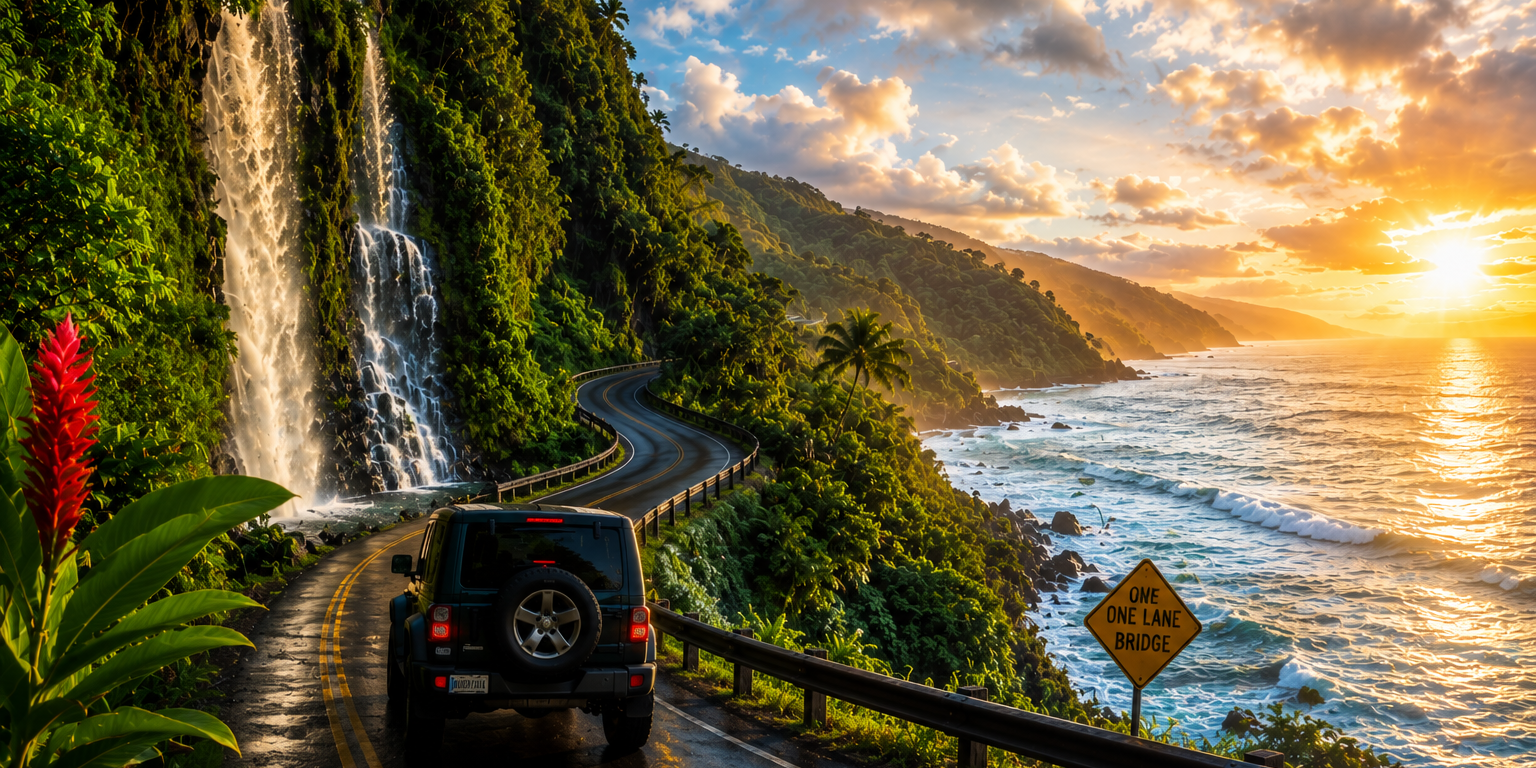
Picture this: you wake up before sunrise, coffee in hand, ready for the drive everyone told you not to miss. Then you hit the road and realize you’re stuck behind six rental cars, three tour vans, and a guy taking a selfie in the middle of a one-lane bridge.
Not exactly the postcard moment you pictured, right?
Here’s the truth nobody puts in the brochure: the Road to Hana isn’t just about where you go. It’s about when. Pick the right month, the right day, even the right hour, and you get waterfalls crashing at full force and quiet turnouts all to yourself. Pick the wrong one, and you get traffic jams on a road that’s barely wide enough for two cars.
Think of this as your quick guide to Maui timing: the months, days, and hours that turn an average drive into the trip people rave about for years.
Why Timing Matters So Much on This Drive?
This isn’t your average scenic drive. It’s about 64 miles of tight turns, over 600 curves, and around 59 one-lane bridges. Every one of those bridges fits only one car at a time, so timing genuinely affects how smooth your day feels.
Rain is another factor. It’s what feeds every waterfall along the highway, but too much of it also makes the road slippery and raises the risk of small landslides. Then there’s the crowd problem. Tour buses and rental cars tend to show up at the same lookout points around the same hours, so if you time it wrong, you’re sharing a waterfall photo with fifty strangers.
Get the timing right, though, and the whole experience changes. Quieter roads. Fuller falls. Way less stress behind the wheel. And honestly, that’s the whole point of a trip like this; you want to remember the view, not the traffic.
Best Time of Year for This Drive
Maui really only has two seasons that matter here: dry and wet. Each one changes what your trip will actually look like, and knowing the difference ahead of time can save you from a soggy hike or a disappointing trickle where a waterfall should be.
Dry Season (April–October)
This stretch brings lighter rainfall and calmer road conditions, which make it a solid pick if you’re driving yourself for the first time. Daylight also lasts longer, so you’re not racing the sunset on the way back.
The tradeoff? Some waterfalls run thinner during the driest months, especially June through August, since there’s less rain feeding them.0
Wet Season (November–March)
This is when the waterfalls truly show off. Heavier rain means fuller, more dramatic falls, which is exactly what most people picture when they imagine Hana Highway waterfalls.
The downside is real, too. Roads can get slick, visibility drops during storms, and there’s a higher chance of temporary closures from landslides.
Shoulder Months: The Sweet Spot
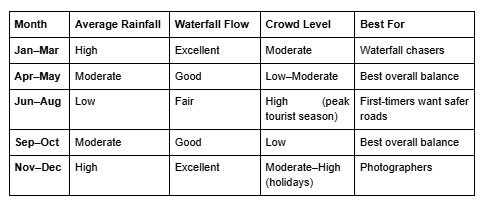
April, May, September, and October tend to hit the sweet spot. You still get decent waterfall flow, the weather stays manageable, and crowds thin out compared to peak summer. If you’re planning for 2026, these are the months worth circling on your calendar.
Locals will tell you these shoulder months are also easier on your budget. Flights and hotel rooms in Maui tend to dip slightly once the summer rush and the winter holidays are over, which means you save money on the trip while still getting great weather for your drive.
Here’s a simple snapshot to help you compare each stretch of the year at a glance.
Best Day of the Week for the Drive
Most people assume every day on this drive looks the same. It doesn’t. The day you pick can be just as important as the month.
Skip the Weekends
Saturdays and Sundays draw both tourists and local families heading out to the same waterfalls and beaches. That means more cars squeezing through those narrow bridges and fuller parking pull-offs at every stop.
Aim for Tuesday Through Thursday
Midweek tends to be noticeably quieter. Fewer people mean easier parking at spots like Twin Falls and Wailua Falls, plus a better shot at having a swimming hole mostly to yourself.
Watch the Cruise Ship Schedule
Cruise ships dock in Kahului on Mondays, Fridays, and Saturdays, and that pushes a wave of extra visitors onto the highway on those days. A quick check of the local cruise schedule before booking your trip can save you from an unexpectedly packed road.
Put simply, if your schedule is flexible at all, a Wednesday drive will almost always feel calmer than a Saturday one, even if you’re visiting during the same month.
Best Time of Day to Start the Drive
Even on the right day, in the right month, your start time still matters more than most people think.
Early Morning is Your Best Friend (7:00–8:00 AM)
Leaving early gets you softer morning light for photos, cooler temperatures for hiking, and first dibs on the popular swimming spots before they fill up. You’ll also beat the bulk of self-drive traffic that tends to hit the road a couple of hours later.
Most seasoned travelers will tell you the same thing when they hand out advice for a Maui trip: whatever time you think you should leave, go thirty minutes earlier. That small buffer usually makes the biggest difference in how relaxed your whole day feels.
Why Midday Departures Usually Backfire?
Between roughly 10 AM and 2 PM, the highway gets its heaviest traffic. Parking fills up fast at the well-known stops, photos get rushed because there’s a line behind you, and the midday heat makes hiking to certain falls less enjoyable.
Guided Tours vs. Self-Drive Timing
This is exactly where booking one of the best Road to Hana tours tends to pay off. A guided tour is already planned around the best times. It will take care of parking and timing, so you can relax and enjoy the scenery instead of worrying about the clock.
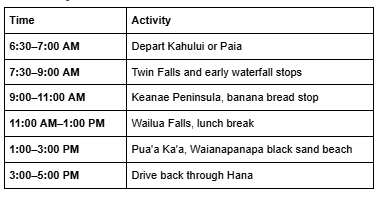
Ideal Daily Timeline for the Road to Hana
Seasonal Waterfall Guide: When Hana Highway Waterfalls Peak
Here’s something a lot of first-time visitors miss: the falls don’t peak during heavy rain; they peak a day or two after it. Rainwater takes time to work its way down from the mountains, so the fullest flow usually shows up shortly after a storm passes, not while it’s happening.
Spots like Twin Falls, Wailua Falls, and Pua’a Ka’a all shift noticeably with the seasons. During wetter months, they roar. During drier months, they slow to a gentler trickle. If chasing a specific waterfall at its most impressive is the whole point of your trip, keep an eye on recent rainfall before you plan your exact date, or simply let a local guide handle that tracking for you.
That’s part of why a route that hits several different falls tends to be a safer bet than planning your whole day around just one.
2026 Considerations: Holidays, Events & Road Conditions
A few dates are worth planning around in 2026, since major U.S. holiday weekends like New Year’s, Presidents’ Day, Memorial Day, the Fourth of July, Labor Day, Thanksgiving, and the Christmas-to-New Year’s stretch all bring noticeably heavier traffic on the highways.
It’s also smart to check Hawaii’s Department of Transportation alerts before heading out, since landslides or bridge repairs can temporarily close sections of the road. This is another area where a guided tour has a real advantage. Local operators track these updates in real time, so guests don’t show up to a surprise detour.
Spring break weeks in March and the back-to-school lull in late August are two other windows worth keeping in mind. Spring break tends to bring families and college students in bigger numbers, while late August sees a quiet dip before the fall shoulder season kicks in.
Keep this section bookmarked if you’re building out a bigger guide to Maui for your trip. Timing this one drive right usually sets the tone for the rest of your island itinerary.
Quick Recap: Best Time to Drive the Road to Hana
- Best months: April–May and September–October.
- Best days: Tuesday through Thursday.
- Best start time: 7:00–8:00 AM.
- Best for full waterfalls: one to two days after rainfall, November through March.
- Best for safety and comfort: dry season, weekday mornings.
Ready to Plan Your Trip?
Timing is really the difference between a stressful drive and one of the best days of your Maui trip. Once you know the right month, day, and hour, the Road to Hana turns into exactly what it’s supposed to be: waterfalls, ocean views, and a road trip you’ll actually want to remember.
If you’d rather skip the planning and just show up ready to enjoy it, Stardust Hawaii runs guided Road to Hana tours built around these exact timing windows. From early-morning departures to stops timed around the most spectacular waterfalls, Stardust Hawaii handles the logistics so you don’t have to. Check out Stardust Hawaii’s Road to Hana tour and book your 2026 trip with a team that already knows this highway inside and out.
FAQs
Q1. What is the best month to drive the Road to Hana?
Ans. April, May, September, and October are generally the best picks. You get a solid mix of flowing waterfalls and easier, more predictable weather without the peak-season crowds.
Q2. What time should I leave for the Road to Hana?
Ans. Aim to leave by 7:00 to 8:00 AM. You’ll get better light for photos, cooler hiking conditions, and a head start before parking lots fill up.
Q3. Is the Road to Hana open year-round?
Ans. Yes, for the most part. Heavy rain can occasionally cause short-term closures, so it’s worth checking road condition alerts or booking a guided tour that already monitors them for you.
Q4. Are Hana Highway waterfalls better in the dry or wet season?
Ans. The wet season, roughly November through March, brings the most impressive waterfalls. That said, the shoulder months still offer strong flow paired with much easier driving conditions.
Q5. Should I self-drive or book a guided tour?
Ans. It really depends on your comfort level. A guided tour removes the guesswork about timing, handles the narrow one-lane bridges for you, and follows a schedule already built around the best light and lowest crowds, making it a great fit for first-time visitors. If you go this route, look for one of the best Road to Hana tours with small groups and flexible stops, so the day still feels personal instead of rushed.