
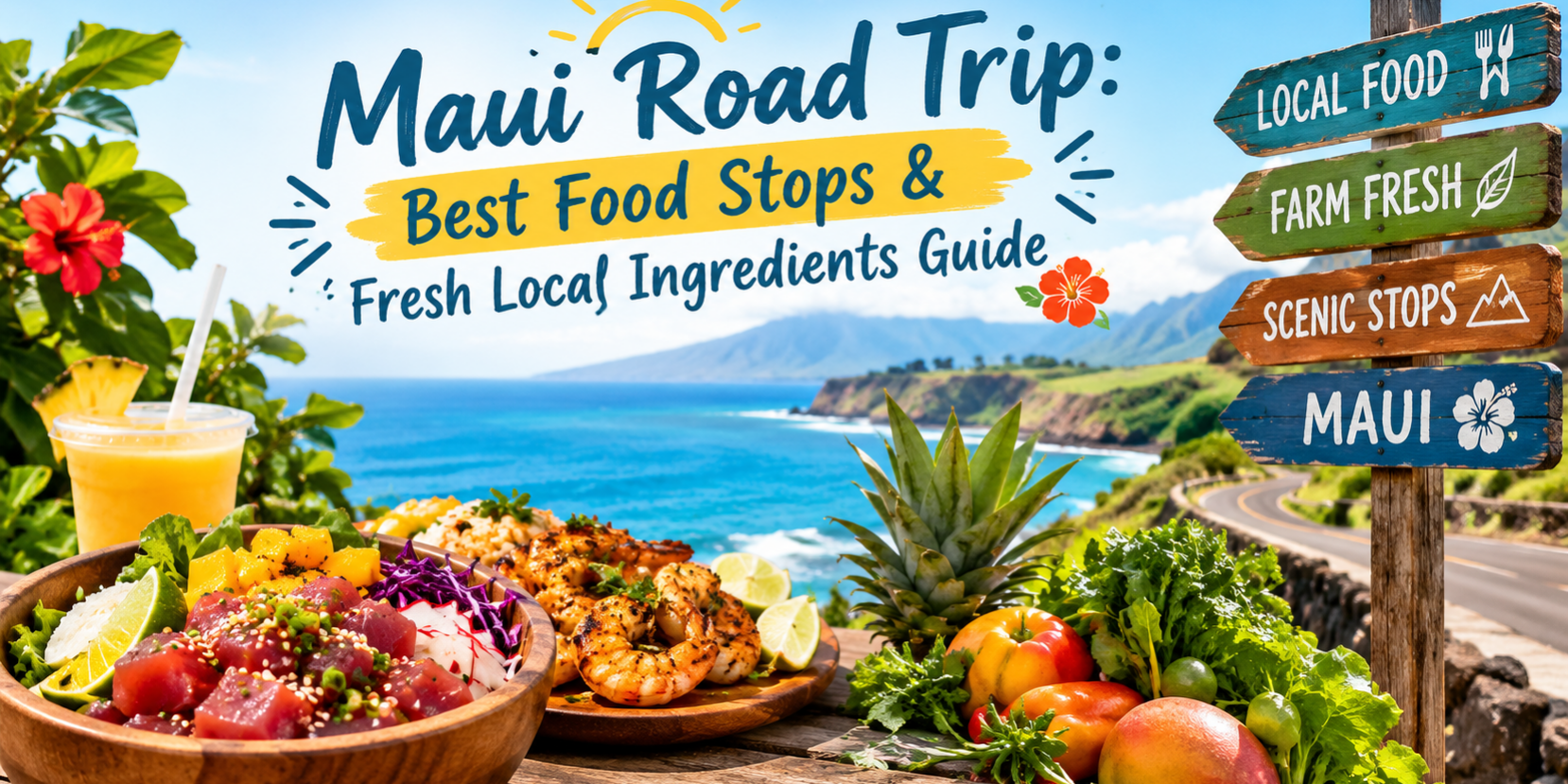
Maui road trips mix great views with great food. You will see fields of Kula strawberries, sweet Maui onions, taro, tropical fruit, and fresh fish. Each one grows in its own part of the island, from the Road to Hana to Upcountry Kula. So, the food you eat matches the land you drive through.
This guide covers what grows on Maui, why the soil makes food taste so good, and how to support local farms. If you’re planning a Maui road trip and want to see the waterfalls on Road to Hana while tasting real island food, this guide covers the best Road to Hana tours and stops along the way.
What Fresh Foods Grow Only in Maui?
Maui grows Kula strawberries, Maui onions, taro, fresh fish, and sweet tropical fruit. Each crop grows best in one part of the island.
- Maui onions grow in Kula, on the slopes of a volcano called Haleakala. They taste mild and sweet, and you can eat them raw.
- Kula strawberries grow high up, near 3,000 feet, where cool air helps the berries grow well.
- Taro grows in wet fields on the Keanae coast. Farmers use taro to make poi, a soft Hawaiian food.
- Fresh fish, like ahi and mahi-mahi, comes from the sea near Maui. Local shops often serve it the same day it’s caught.
- Tropical fruit, like passion fruit and lychee, grows in many spots. The dry side and the wet side each grow their own kinds.
- Banana bread isn’t a crop, but it’s a famous Road to Hana treat, made with fresh bananas and sold at stands like Aunty Sandy’s in Keanae.
Why Does Maui’s Soil Make Food Taste So Good?
Maui’s soil comes from old volcano ash. This soil holds water well. It also holds good plant food. The volcano Haleakala creates many small weather zones close by. This lets many crops grow well on one small island.
- Fast drainage plus rich plant food helps onions and berries taste sweet.
- Maui’s land goes from the beach up to over 6,000 feet high. So farmers can grow cool crops, like berries, next to warm crops, like bananas.
- Wind brings rain to the east side, near Hana. That side grows taro well. The west side stays dry and grows onions and dry fruit well.
- Soil experts at the University of Hawaii have studied this soil for years. They confirm it holds strong plant food and drains fast.
Which Maui Drives Have the Best Farm Stands and Food Stops?
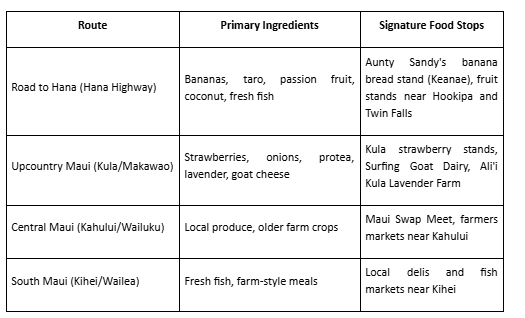
The Road to Hana and the Upcountry drive through Kula have the most farm stands on Maui. Each route runs through a different type of farmland, and both are staples of any Maui road trip.
How Does Local Food Make a Maui Road Trip Better?
Local food ties your senses to the land right in front of you. Taste and smell make a place stick in your mind. Food adds a layer that a nice view alone can’t give you, and it’s part of what makes a Maui road trip feel different from a normal drive.
- Warm banana bread near Keanae’s taro fields ties the taste to the land that grew it.
- Fresh coconut water near one of the waterfalls on Road to Hana makes the tropical air feel more real.
- Cool, sweet berries up in Kula show you the shift from hot coast to cool hills.
- On a guided tour, food stops are already planned. You don’t have to guess where to eat.
Where Are the Best Farm Stands and Food Trucks on Maui?
Some top food stops on Maui are Aunty Sandy’s banana bread stand, Kula’s strawberry stands, and Surfing Goat Dairy. Local families run these stops, not big brands, and many sit close to the waterfalls on Road to Hana.
Food Stops Along the Road to Hana
- Paia Town: the start of the drive, with small cafes and bakeries.
- Hookipa Lookout: a view spot near fruit stands and a famous surf beach.
- Twin Falls: often the first stop, with stands selling fresh pineapple, coconut, and banana.
- Keanae: home to taro fields and Aunty Sandy’s banana bread stand.
- Waianapanapa Black Sand Beach: a common lunch stop with a black sand beach.
- Pua’a Ka’a Falls: a swim stop, often visited right after lunch.
Food Stops on the Upcountry Maui (Kula) Drive
- Aunty Sandy’s for delicious Banana bread
- Kula strawberry stands sell fruit right off the farm, up on the hills.
- Surfing Goat Dairy makes fresh goat cheese. You can also tour the farm.
- Ali’i Kula Lavender Farm grows lavender in the same cool hills as the berries.
- Kula onion farms often sell onions right at the farm gate during harvest time.
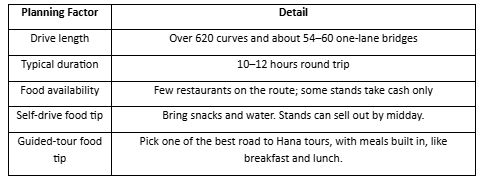
Road to Hana Food Planning at a Glance
Why Does Local Food Matter So Much in Hawaii?
Local food in Hawaii goes back to old Native Hawaiian farming. Farmers grew taro in land strips that ran from the hills to the sea, in a system called ahupua’a. Taro means more than food to Hawaiian people.
- An old Hawaiian chant, the Kumulipo, calls taro an ancestor of the Hawaiian people.
- The old land system let people grow taro up in the hills and catch fish down by the shore, all as one shared plan.
- Long ago, people came to Hawaii from Japan, China, the Philippines, and Portugal, bringing new crops and foods that still shape Maui’s food today.
- Small family farms behind today’s roadside stands come from this same long history.
How Can You Support Maui Farmers the Right Way?
Buy food right from farm stands. Pick tours that use local food. Respect signs on private land and old farm sites, like taro fields.
- Buy from small roadside stands when you can, and skip the packaged store version.
- Bring cash, since many small stands on the Road to Hana don’t take cards.
- Don’t walk into taro fields or farmland without asking first. These are working farms.
- Pick tour groups that use local food to help small Maui businesses.
- Ask what’s in season. Many farm owners love to talk about their crops.
Plan Your Taste of Maui Road Trip
A Maui road trip links right to the island’s food, from Upcountry farm stands to stops along the Hana Highway. The soil and the island’s mixed past both shape what ends up on your plate.
Want to see the waterfalls on Road to Hana and enjoy great local food too? Stardust Hawaii’s Famous Road to Hana Waterfalls & Lunch tour is one of the best Road to Hana tours for it, building breakfast, a banana bread stop, and a fresh deli lunch into one small-group drive; the perfect way to end any Maui road trip.
FAQs
Q1. What are the best Road to Hana tours for local food?
Ans. The best Road to Hana tours build local food stops right into the day, so a Maui road trip and a farm-to-table meal happen at once. Stardust Hawaii’s Famous Road to Hana Waterfalls & Lunch tour is one great pick. Your day starts with fresh pastries, plus snacks and drinks along the way. You’ll stop at a well-known banana bread stand, then eat a fresh deli lunch with local fruit at a pretty spot like Waianapanapa Black Sand Beach. Groups stay small, with up to 14 guests per van.
Q2. What are the waterfalls on Road to Hana, and are there food stops nearby?
Ans. The waterfalls on Road to Hana include Twin Falls, Waikamoi Falls, and Pua’a Ka’a Falls, and many sit close to food stops. Twin Falls, one of the first stops, often has fruit stands nearby. Pua’a Ka’a Falls is a good swim stop after lunch.
Q3. Is it better to drive the Road to Hana yourself or take a guided tour?
Ans. A guided tour takes the stress out of the drive and plans your food stops for you. Driving yourself gives more free time to stop where you like, but you must pack food ahead, since stands can sell out by midday. A guided tour, like the ones on the list of best road to Hana tours from Stardust Hawaii, builds breakfast, snacks, and lunch right into the day.
Q4. What should you pack for a Maui food-focused road trip?
Ans. Bring cash for stands, a water bottle, sunscreen, and a cooler bag if you drive yourself. On a guided tour, most of this is already done for you, so you can focus on enjoying your Maui road trip.